THE GUARDIAN
Liaquat Ali Khan
1895 – 1951 · QUAID-E-MILLAT
Jinnah's Right Hand — Founder of Pakistan's Administration
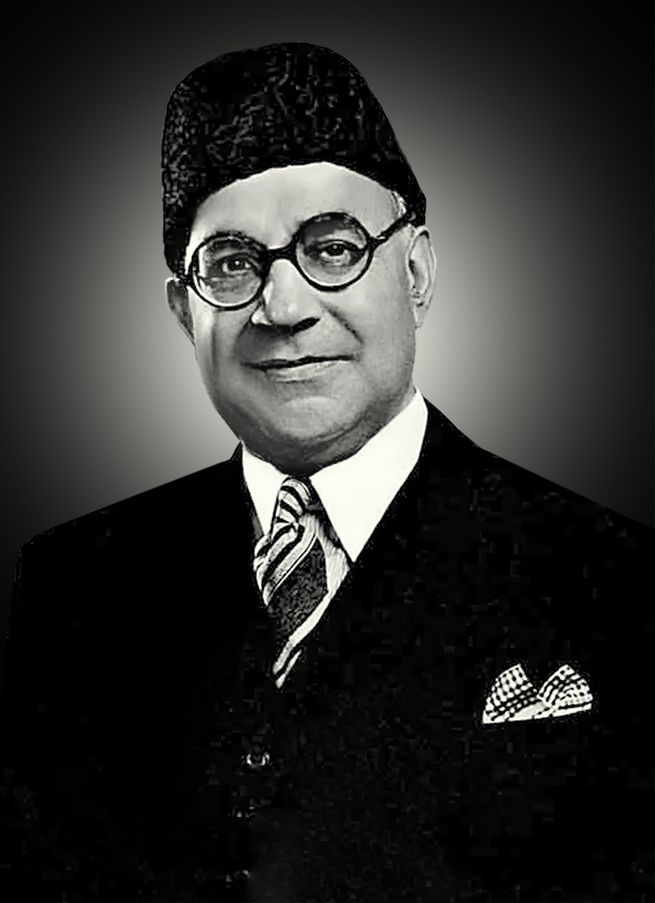
QUICK INFORMATION
- FULL NAME
- Nawabzada Liaquat Ali Khan
- BORN
- 1 October 1895, Karnal, Punjab, India
- DIED
- 16 October 1951 (age 56), Rawalpindi
- EDUCATION
- Aligarh Muslim University; Exeter College, Oxford; Inner Temple
- PROFESSION
- Barrister, Statesman
- SPOUSE
- Jehangira Begum (1918), Begum Ra'ana (1932)
- CHILDREN
- Wilayat, Akbar, Ashraf
- PM TENURE
- 15 Aug 1947 – 16 Oct 1951 (1,524 days)
- TITLES
- Quaid-e-Millat, Shaheed-e-Millat
- RECORD
- Longest-serving PM (1,524 days)
- RESTING PLACE
- Mazar-e-Quaid, Karachi
BIOGRAPHY
Nawabzada Liaquat Ali Khan (1 October 1895 – 16 October 1951) was a Pakistani lawyer, politician, and statesman who served as the first Prime Minister of Pakistan from 1947 until his assassination in 1951. He was as pivotal to the consolidation of Pakistan as the Quaid-i-Azam, Muhammad Ali Jinnah, was central to the creation of Pakistan. He is revered as Quaid-e-Millat ("Leader of the Nation") and later as Shaheed-e-Millat ("Martyr of the Nation").
Born into a wealthy landholding family in Karnal, Punjab Province, British India (now in Haryana, India), Liaquat was educated at Aligarh, Allahabad, and Exeter College, Oxford. A barrister by profession, like his leader Jinnah, he entered politics in 1923 and was first elected to the provincial legislature of the United Provinces.
Jinnah's Right-Hand Man
IN THEIR WORDS
Famous Quotes
“This flag will be the flag of freedom, not only for the people of Pakistan; this will be an emblem of peace to help maintain peace throughout the world.
“The most important occasion in the life of this country, next in importance, only to the achievement of independence.
“خدا پاکستان کی حفاظت کرے
THE JOURNEY
Political Career Timeline
- 1923
Returned to India and joined the All-India Muslim League, refusing an invitation to join the Indian National Congress.
- 1926
Elected to the United Provinces Provincial Legislative Council from the rural Muslim constituency of Muzaffarnagar, beginning his parliamentary career.
- 1932
Unanimously elected Deputy President of the UP Legislative Council. Also married his second wife, Begum Ra'ana, a prominent economist and educationist.
- 1936
Jinnah returned to India and at the Bombay session of the Muslim League personally moved a resolution appointing Liaquat as the Honorary General Secretary of the All-India Muslim League — a position he held until 1947.
- 1940
Elected to the Central Legislative Assembly from the Barielly constituency. Became Deputy Leader of the Muslim League Parliamentary party.
- 1945
Won the Central Legislature election from Meerut constituency and was elected Chairman of the League's Central Parliamentary Board.
- 1946
Appointed leader of the Muslim League group in the Interim Government and given the portfolio of Finance Minister — becoming the first Indian Finance Minister of British India. His "Poor Man's Budget" for 1947-48 was widely acclaimed.
- 15 Aug 1947
Appointed first Prime Minister of Pakistan and Minister of Defence. Presented the national flag in the first Constituent Assembly on August 11, 1947.
- 11 Sep 1948
After Jinnah's death, Liaquat chose to remain Prime Minister rather than elevate himself to Governor-General, demonstrating his democratic values. Became President of the Pakistan Muslim League.
- 1949
Presented the Objectives Resolution in the Constituent Assembly (passed March 12, 1949) — considered the "Magna Carta" of Pakistan's constitutional history. Established the National Bank of Pakistan in November 1949.
- 1950
Signed the Liaquat-Nehru Pact in New Delhi with Indian Prime Minister Jawaharlal Nehru to protect religious minorities on both sides of the border.
- March 1951
Survived an attempted coup by left-wing political opponents and segments of the Pakistani military (Rawalpindi Conspiracy).
- May 1951
Visited the United States, setting Pakistan's foreign policy course toward closer ties with the West.
- 16 Oct 1951
Assassinated while addressing a public meeting in Company Bagh, Rawalpindi.
THE RECORD
Landmark Achievements
Objectives Resolution (1949)
Presented the foundational document for Pakistan's constitution, outlining the vision of an Islamic democracy with Allah's sovereignty, democracy, freedom, equality, tolerance, and social justice as enunciated by Islam.
National Bank of Pakistan
Established the National Bank of Pakistan in November 1949 and installed a paper currency mill in Karachi, laying the foundation of Pakistan's financial system.
Kashmir Ceasefire (1948)
Through UN efforts, secured a ceasefire in Kashmir in January 1948 and agreement for a free and impartial plebiscite under UN supervision.
Liaquat-Nehru Pact (1950)
Signed agreement with Indian PM Nehru to protect religious minorities on both sides of the border, reducing tensions and preventing war.
US Visit (1951)
Set Pakistan's foreign policy course toward closer ties with the West during the Cold War, building strategic partnerships.
Administrative System
Established an effective administrative system for the new country and dealt with the refugee crisis following partition.
Early Life & Education
Liaquat Ali Khan was born on 1 October 1895 into a wealthy and aristocratic landholding family in Karnal, Punjab Province (now Haryana, India). He was the second of four sons of Nawab Rustam Ali Khan, a landowner with the titles Rukn-ud-Daulah, Shamsher Jung, and Nawab Bahadur. His family claimed Persian origin tracing back to Nausherwan the Just, the Sassanid king of Persia.
Despite being offered a job in the Indian Civil Services after graduation, he rejected it on the plea that he wanted to serve his nation.
First Cabinet of Pakistan (1947–1951)
The Foreign Policy Choice: US vs. Soviet Union
In mid-1949, US President Truman invited Jawaharlal Nehru for a state visit — the first by a South Asian leader. When Liaquat did not receive a similar invitation, his pride was hurt, and he felt snubbed.
The Objectives Resolution (1949)
The Objectives Resolution remains one of Liaquat's most enduring and debated legacies. It proclaimed Allah's sovereignty over the universe, entrusting it to the Pakistani State under the condition that it be "exercised within the limits prescribed by Him".
Assassination — 16 October 1951
Unmatched Sacrifice: Leaving Everything Behind
Liaquat Ali Khan was one of the wealthiest leaders of the Pakistan Movement, yet he donated everything for Pakistan:
“Unlike many, Liaquat Ali Khan or his family neither claimed nor accepted a single piece of property in lieu of his extensive land holdings and the residences he left behind in India.
THE IMPRINT
Legacy & Impact
Liaquat Ali Khan's legacy is that of a nation-builder who established the administrative, economic, and constitutional foundations of Pakistan during its most critical years. As Pakistan's first and longest-serving Prime Minister (1,524 days), he guided the country through the refugee crisis, established the State Bank and financial systems, and set the direction of foreign policy.
The Objectives Resolution remains his most enduring constitutional legacy, though its transformation under later regimes has been controversial. His Liaquat-Nehru Pact demonstrated his commitment to protecting minorities and peaceful coexistence with India.
His assassination in 1951 remains an unresolved mystery that robbed Pakistan of its most experienced civilian leader at a critical juncture. Many historians argue that his death created a leadership vacuum that contributed to subsequent political instability and the first military coup in 1958.
Today, Liaquat is honored with the titles Quaid-e-Millat (Leader of the Nation) and Shaheed-e-Millat (Martyr of the Nation). Liaquat Bagh in Rawalpindi — where he was assassinated — remains a symbol of his sacrifice.
His unparalleled sacrifice — leaving behind immense wealth and property in India and refusing compensation in Pakistan — stands as a testament to his selfless commitment to the nation he helped build.
1,524 Days (Longest)
PM TENURE
1936–1947 (11 Years)
MUSLIM LEAGUE GS
1926–1951 (25 Years)
LEGISLATIVE CAREER
PM, Defence, Foreign, Finance
CABINET PORTFOLIOS
Liaquat-Nehru Pact (1950)
INTERNATIONAL AGREEMENTS
300+ Villages, 3 Palaces
PROPERTY DONATED
Quaid-e-Millat, Shaheed-e-Millat
HONORIFICS
Liaquat Bagh, Rawalpindi
ASSASSINATION SITE
If Quaid-i-Azam founded Pakistan, Liaquat Ali Khan established it, laying down the main lines of policy, domestic and foreign, that afterward guided the country.
— Encyclopædia Britannica