
قائداعظم محمد علی جناح
Quaid-e-Azam Muhammad Ali Jinnah
Founder of Pakistan • Great Leader • Visionary Statesman
Biography
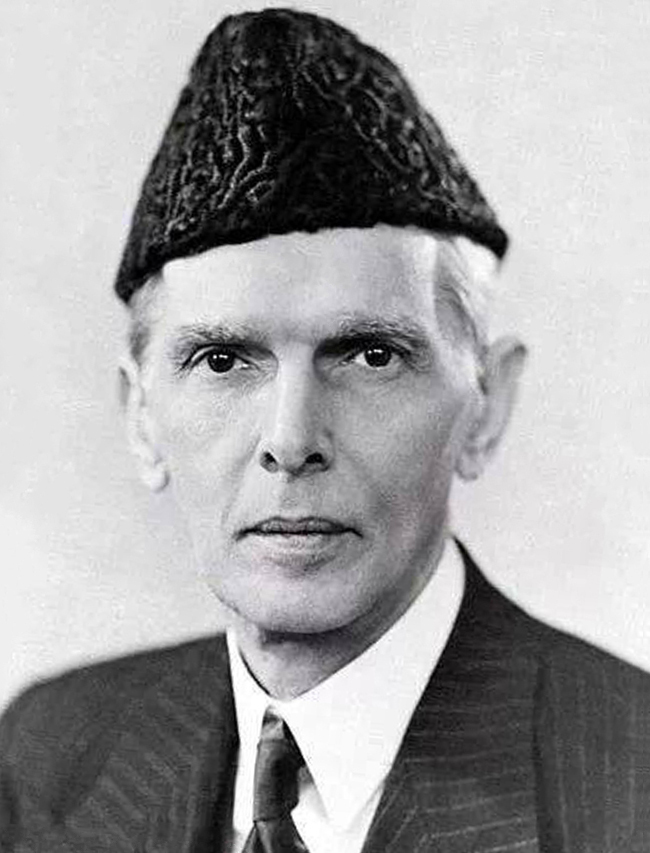
Muhammad Ali Jinnah (25 December 1876 – 11 September 1948) was a barrister, politician, and the founder of Pakistan. He served as the leader of the All-India Muslim League from 1913 until Pakistan’s independence in 1947, and then as Pakistan’s first Governor-General until his death. He is revered in Pakistan as Quaid-e-Azam (“Great Leader”) and Baba-e-Qaum (“Father of the Nation”).
Born in Karachi to a Gujarati merchant family, Jinnah was educated at the Sindh Madrasa and the Christian Mission School. At 16, he traveled to London to study law at Lincoln’s Inn, becoming the youngest Indian to be called to the bar at 19. He returned to India in 1896 and established a successful legal practice in Bombay, but soon became drawn to politics.
🌟 The Making of a Leader
Initially a member of the Indian National Congress, Jinnah joined the Muslim League in 1913 and became its president in 1916. By 1940, convinced that Muslims needed a separate homeland, he led the Lahore Resolution demanding Pakistan. Through brilliant political strategy and unwavering determination, he achieved independence on 14 August 1947.
Quick Information
Iconic Quotes
Historical Timeline
Landmark Achievements
🇵🇰 Creation of Pakistan
Led the Muslim League to successfully achieve a separate homeland for Muslims of South Asia through constitutional struggle and political mobilization.
⚖️ Lucknow Pact (1916)
Brokered historic agreement between Congress and Muslim League, accepting separate electorates for Muslims.
📜 Fourteen Points (1929)
Formulated constitutional safeguards for Muslim rights that became the basis of Pakistan’s political framework.
🏛️ State Bank of Pakistan
Established the central bank and laid foundations of Pakistan’s financial system.
📰 Dawn Newspaper
Founded Dawn in 1941 as a voice for Muslim League’s cause, now Pakistan’s oldest English newspaper.
🤝 Refugee Rehabilitation
Led massive relief and rehabilitation efforts for millions of refugees migrating to Pakistan.
Legacy & Impact
Quaid-e-Azam’s vision for Pakistan was that of a democratic, progressive, and tolerant nation where all citizens would have equal rights regardless of religion, caste, or creed. His August 11, 1947 speech to the Constituent Assembly remains a foundational document for religious freedom and minority rights in Pakistan.
Today, Jinnah’s portraits hang in every government office, and his mausoleum in Karachi is a national symbol. His principles of Unity, Faith, and Discipline remain Pakistan’s official motto. Universities, airports, and countless institutions bear his name. He is remembered not just as a political leader, but as an icon of integrity, determination, and visionary leadership who changed the map of South Asia forever.